
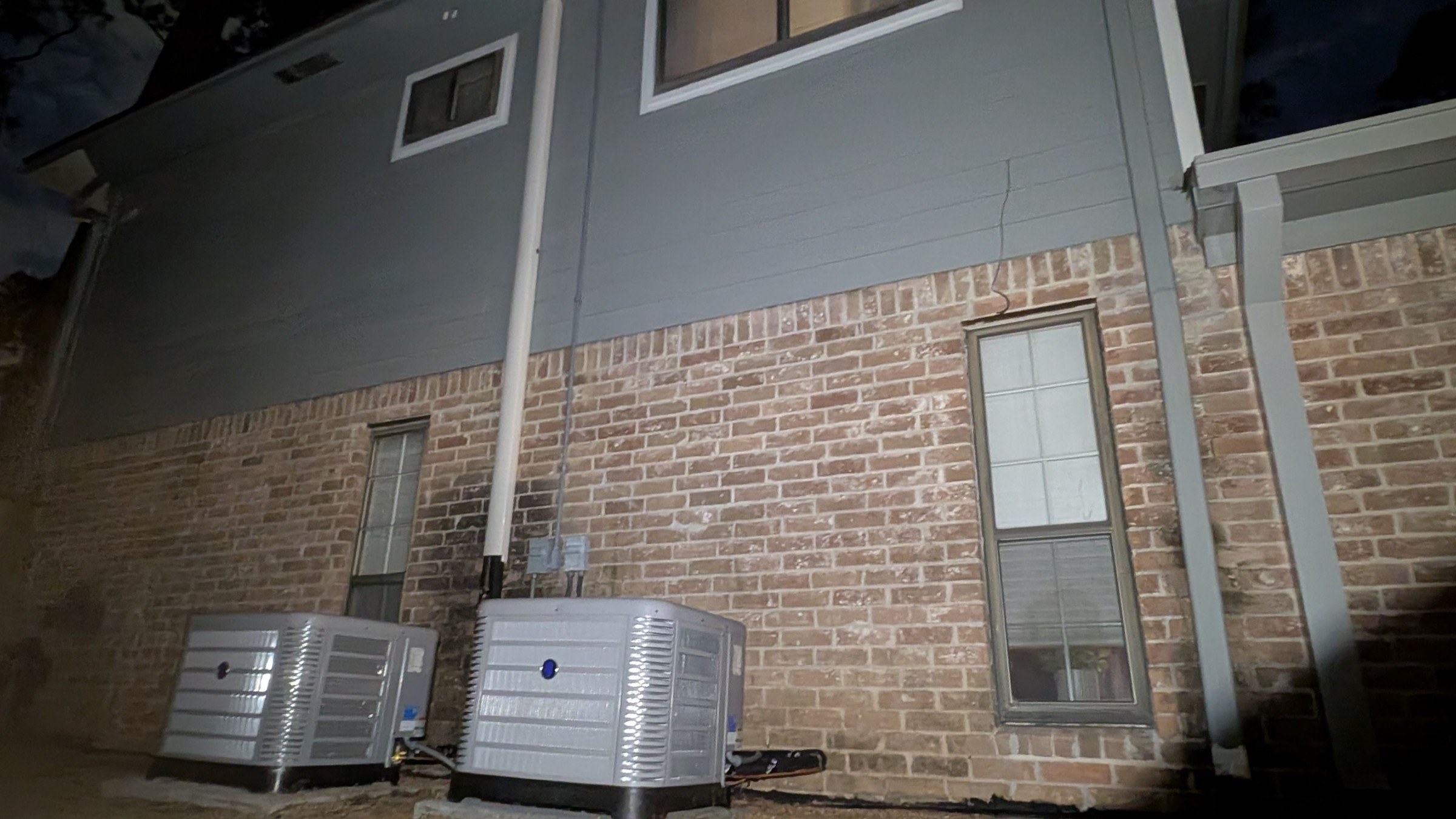
Heating in Houston is its own animal. You might need heat twelve days a year and cooling the other three hundred. The right system is the one that spends most of its life as an efficient air conditioner and still keeps you comfortable on those few 38-degree mornings.
Let's be honest, Houston is not Minneapolis. Nobody's shoveling snow. But when a front rolls in, 40° feels arctic if you're used to triple-digit summers. Gas, electric strip heat and heat pumps all work here. They just don't cost the same to own.
How the three options actually behave
A gas furnace costs more to install and less to run in a big house that already has gas. It heats fast, which is why people like it on a sudden 30° morning. You're paying for a fuel line, combustion and a flue, though, and you've added a carbon monoxide conversation you don't have with a heat pump.
Electric furnaces, or heat strips, are cheap up front and expensive every time they actually run. They're basically a big resistance heater. Simple, reliable, and a bill you'll notice if a cold snap hangs around for a week.
A heat pump moves heat instead of making it. In a mild Houston winter it's two to three times more efficient than electric strip heat, which is why heat pumps have become the default on a lot of replacements. On the coldest nights it may lean on strip heat as backup, and that's the expensive part. A correctly sized heat pump should rarely need it here.
- A gas furnace costs more to install but less each month if gas is already in the house. It makes the most sense in larger homes with existing gas.
- Electric strips are the cheapest to put in and the most expensive in winter. They're fine for small homes or as backup for a heat pump.
- A heat pump lands in the middle on install cost and is efficient all year. It's usually the Houston winner when the ducts and electrical can support it.
What actually decides it
Do you already have gas? How big is the house? What shape is the ductwork in? Are you replacing a failed outdoor unit or the whole system? An undersized heat pump, or ducts leaking into a 130° attic, will make any fuel look like a bad idea.
There isn't a universal winner. We'll look at the equipment and the utility situation with you and tell you which one we'd put in our own house, even when the answer is “keep repairing this one for two more seasons.”
If you're weighing a new system, here's how we handle residential HVAC replacement. If the heater you have just needs fixing, see heating and furnace repair.
From all of us at Velocity Air A/C & Heating