
September 24, 2026 · 6 min read
How Preventative Maintenance Extends AC Life — and Stops Peak-Season Breakdowns
Greater Houston does not give your air conditioner a long nap. From late spring through early fall, most homes run cooling hard — long daily runtime, high outdoor temperatures, and humidity that forces the indoor coil to wring water out of the air for hours at a time. That is normal for this climate. What is not normal is asking a neglected system to do that work without ever cleaning filters, checking the drain, or catching a worn electrical part before it opens on the hottest afternoon of the year.
This piece is for homeowners who want the honest version: what peak season does to equipment, what a preventative visit actually does, and where DIY stops and a tech should take over. No invented savings percentages. No guaranteed lifespan years. Just the craftsman’s view from the attic and the pad.
Why Houston peak season kills neglected systems
Runtime is the first stressor. A system that cools almost every day for months puts more hours on the compressor, blower, and outdoor fan than the same equipment would see in a milder climate. Heat is the second: outdoor units sit in radiant sun on roofs and pads while they reject heat. Humidity is the third: condensate has to leave the house through a drain that clogs easily when algae and dust build up.
None of that means your equipment is doomed. It means deferred maintenance shows up as weak airflow, iced coils, tripped float switches, failed capacitors, and “warm air from the vents” calls — usually when every contractor in town is already booked. Peak season does not invent failures so much as it finishes the ones that were already forming.
What preventative maintenance actually does
A solid visit is a checklist, not a marketing ritual. At a high level, we are protecting airflow, heat transfer, condensate removal, and the electrical parts that take the beating of start-stop cycles.
- Airflow and filters: confirm the filter size and condition, and that return paths are not starving the blower
- Coils: inspect indoor and outdoor coils; clean when dirt is clearly hurting heat transfer
- Drain: clear and verify the condensate path so the pan does not overflow or trip a float mid-day
- Electrical wear parts: look at capacitors, contactors, and connections that fail under load before they strand you
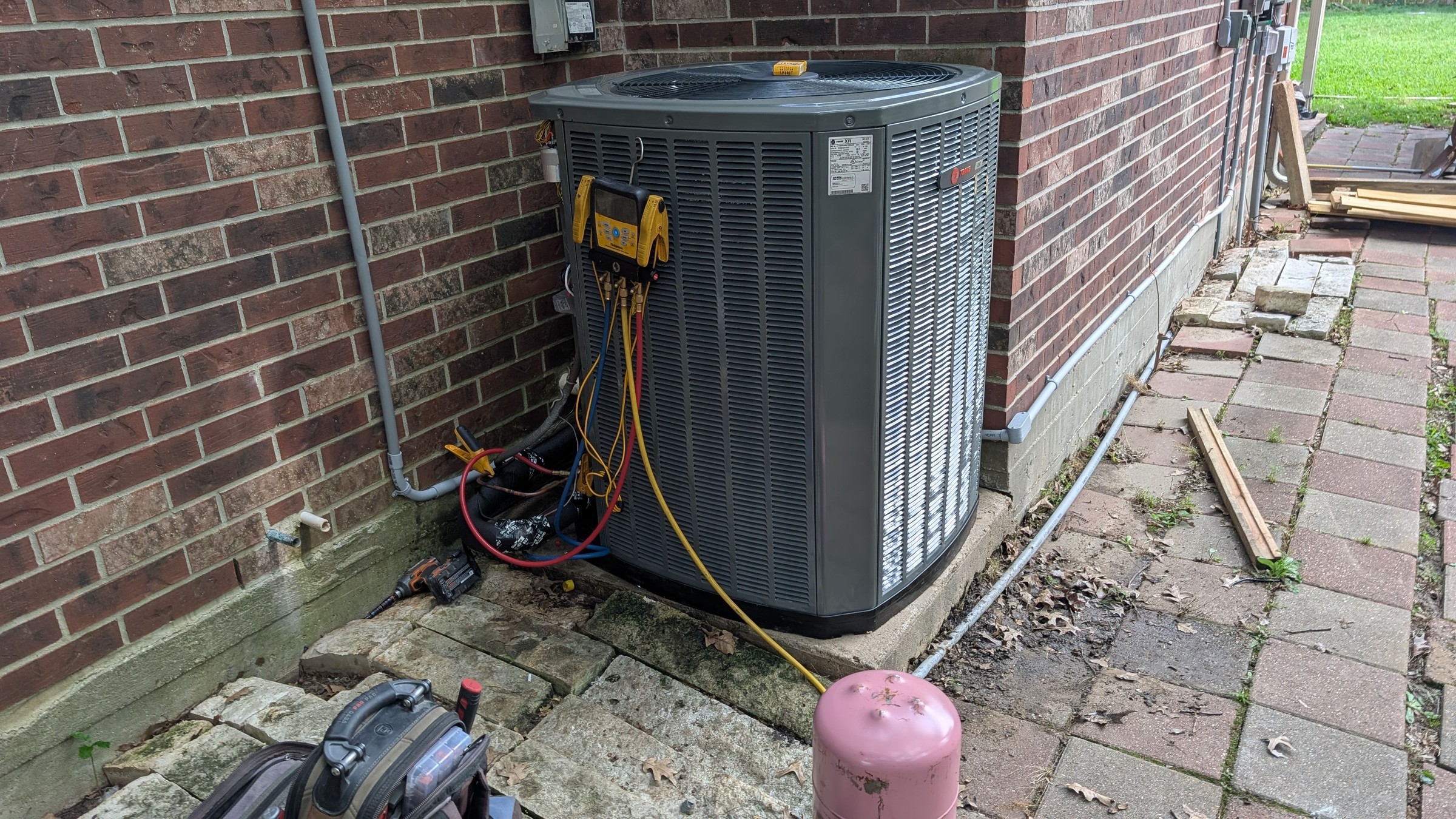
- Refrigerant / charge checks: gauge and temperature checks at a high level to catch undercharge or airflow-related symptoms — not a freon top-off by habit
We also document what we find — nameplates, filter size, and baselines on a well-run membership visit — so the next trip has something real to compare against. That is preventative work: catch weak parts early, keep airflow and heat transfer honest, and give the next visit a real baseline.
How that extends equipment life and cuts mid-summer no-cool failures
Clean airflow keeps the coil from freezing and the compressor from working against a choked system. A clear drain keeps the house dry and the system running instead of shutting off on a full pan. Catching a weak capacitor or a failing contactor in April is cheaper and calmer than finding it at 4 p.m. on a 98° Saturday.
Over years, that pattern matters more than any single repair. Equipment that breathes, drains, and starts cleanly spends less time in the failure modes that shorten compressor and blower life. You still replace systems when age and economics say so — we are honest about that — but you get more useful seasons out of what you already own, and fewer emergency no-cool days in the middle of Houston summer.
DIY vs a pro visit
Homeowners should own the easy, frequent jobs. Pros should own the full checklist.
- DIY: change filters on the schedule your home actually needs (often every 30–60 days here), keep returns and supplies open, and clear obvious standing water or algae at an accessible drain if you know how and the line is accessible
- Pro: coil cleaning when needed, electrical wear-part inspection, safe refrigerant checks, float-switch and full drain-path verification, and a documented look at how the system is actually performing under load
If you only do filters and never look at the drain or outdoor coil, you have done the cheapest third of the job and left the rest for peak season to expose. If you never change filters and wait for an annual visit to fix everything, you will still freeze coils and cook blowers between appointments. Both sides matter.
A soft next step: Velocity Care
If you want seasonal preventative visits on a schedule — spring cooling and fall heating — with member pricing when something does break, that is what Velocity Care is for. Plan details and pricing live on the membership page.
Read the plans on our Velocity Care membership page (/velocity-care/), or call (832) 589-0813 and ask for Velocity Care. Class A licensed · TACLA153648C. We would rather catch the weak part in spring than meet you in August with a warm house and no cold air.
— Your friends at Velocity Air A/C & Heating